
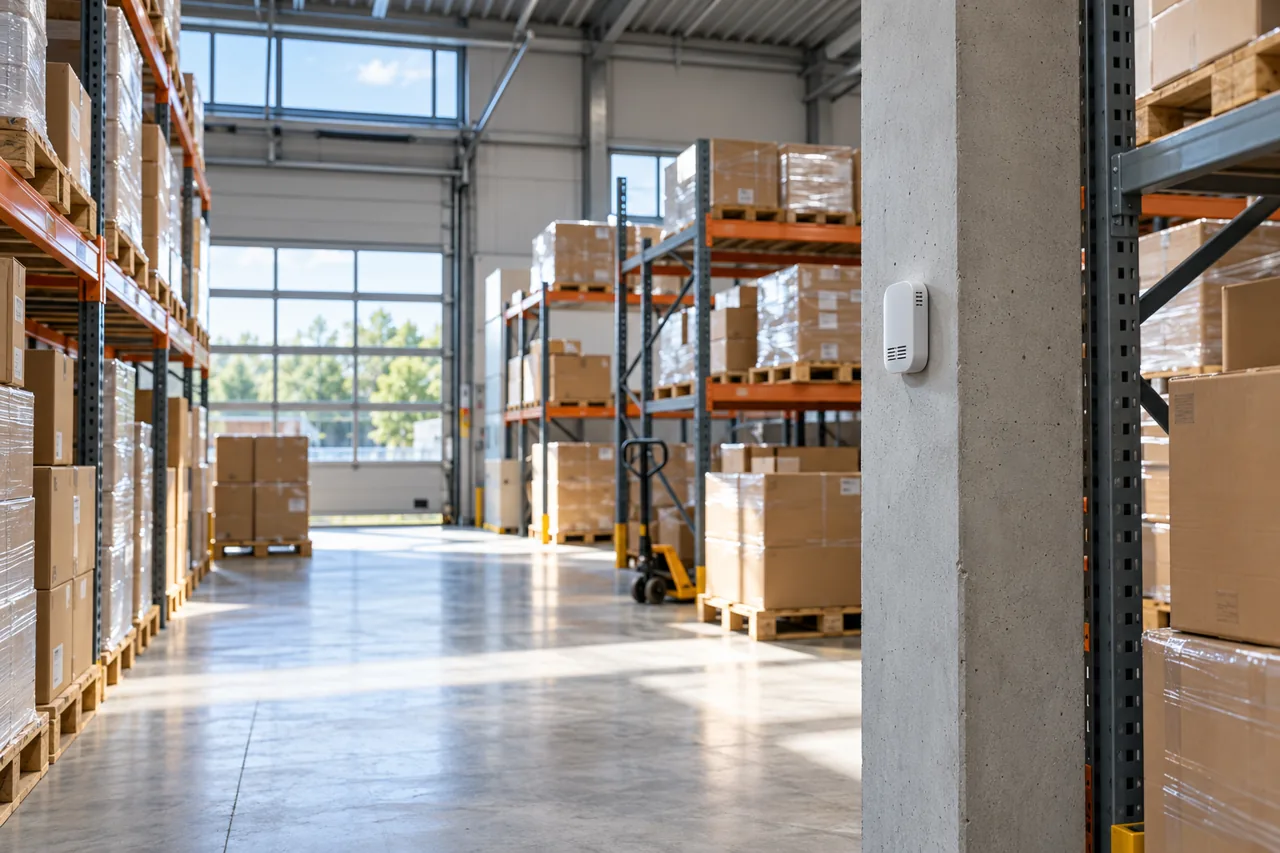
One hall, different conditions
Conditions near a loading door, under the roof and within storage areas can differ. A single sensor beside a desk may not represent an entire warehouse. Measurement points follow the hall layout, stored materials and working pattern. Temperature and relative-humidity readings help track changes and identify areas needing investigation.
From archives to production support areas
The system can support warehouses, archives, plant rooms and industrial halls. Depending on the objective, we add CO₂, water presence, pressure or equipment signals. Each parameter needs a suitable sensor and agreed scope. Before deployment, we define what action the reading should inform: inspecting ventilation, checking a leak or reviewing storage conditions.
Fewer routine rounds, more comparable data
History helps compare zones, working days and shutdown periods. Alerts follow processes rather than one universal threshold for the entire site. Wired and LoRaWAN sensors can share one system. Reading frequency reflects the speed of change, connectivity and power supply. A measurement does not replace investigation of the cause by the responsible person.
Preparing the deployment
Start with a site plan, an approximate number of zones and what you want to protect or improve. We check available infrastructure, gateway positions and installation conditions. Begin with a representative zone, assess the readings and expand. Support, reports and notification recipients are agreed before commissioning.
Your questions answered
Is one sensor enough for a whole hall?
That cannot be assumed without a site assessment. The number of points depends on zones, heat sources, ventilation and the measurement objective.
Can water-leak sensors be added?
Yes, with compatible devices and suitable locations. Notifications can be assigned to the appropriate people.