Indoor temperature, humidity and air quality. History, alerts, reports and automatic control of compatible heating, cooling and ventilation systems.
A dedicated service within the broader Opomiarowani range
This service covers indoor spaces: offices, workplaces, rooms and commercial premises. Soil, energy, inverter, meter and other equipment monitoring remain part of our wider offering.
Measurements, history and an agreed response
We select temperature and humidity measurement points and, where required, CO₂ or other air quality parameters. We agree thresholds, alert delays, recipients and reporting scope. Data gaps are identified; a missing reading does not mean conditions are normal.
From sensors to an operational system
We survey the site, select sensors and connectivity, install and configure monitoring. We agree history retention, exports and maintenance. Home Assistant runs the logic and automation; DATPOL Control provides views, history and control buttons according to access permissions.
Measure conditions. Respond automatically.
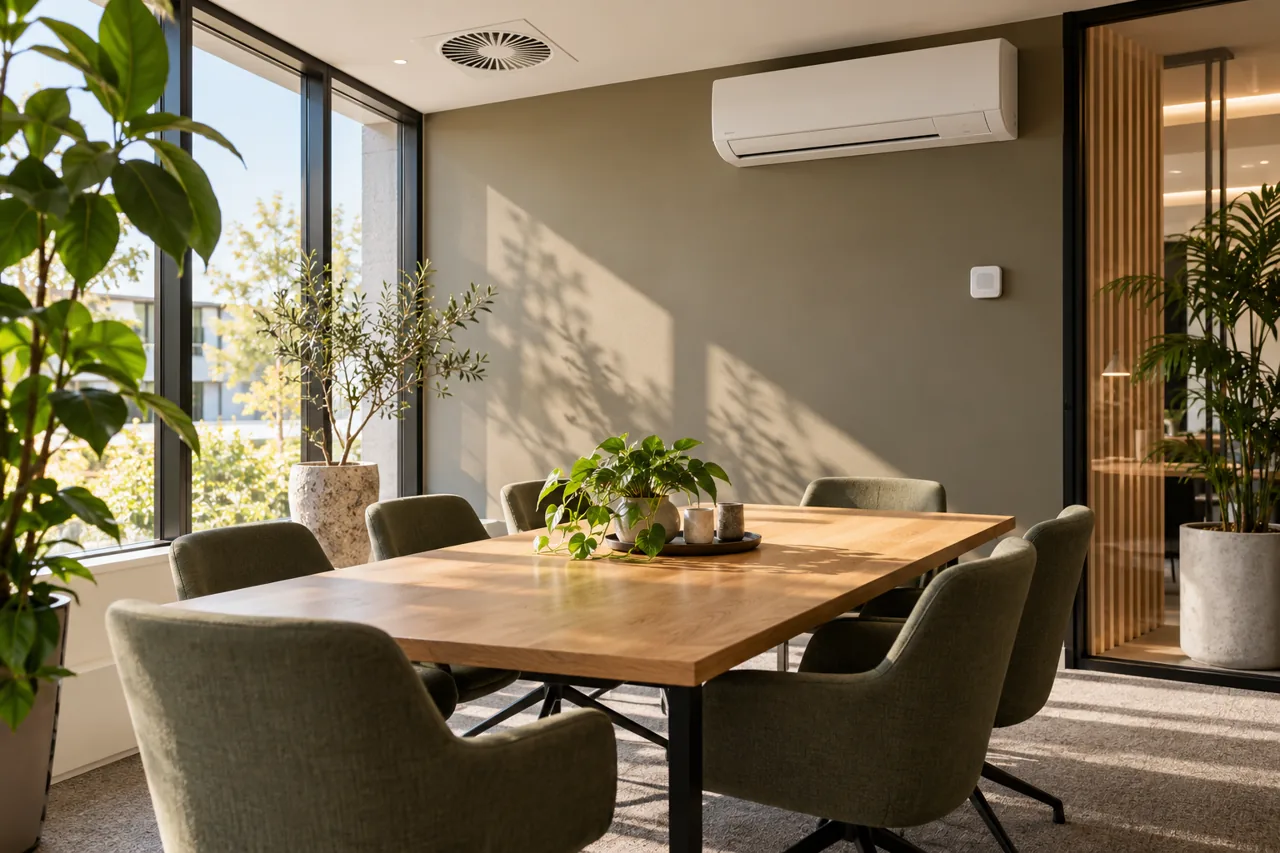
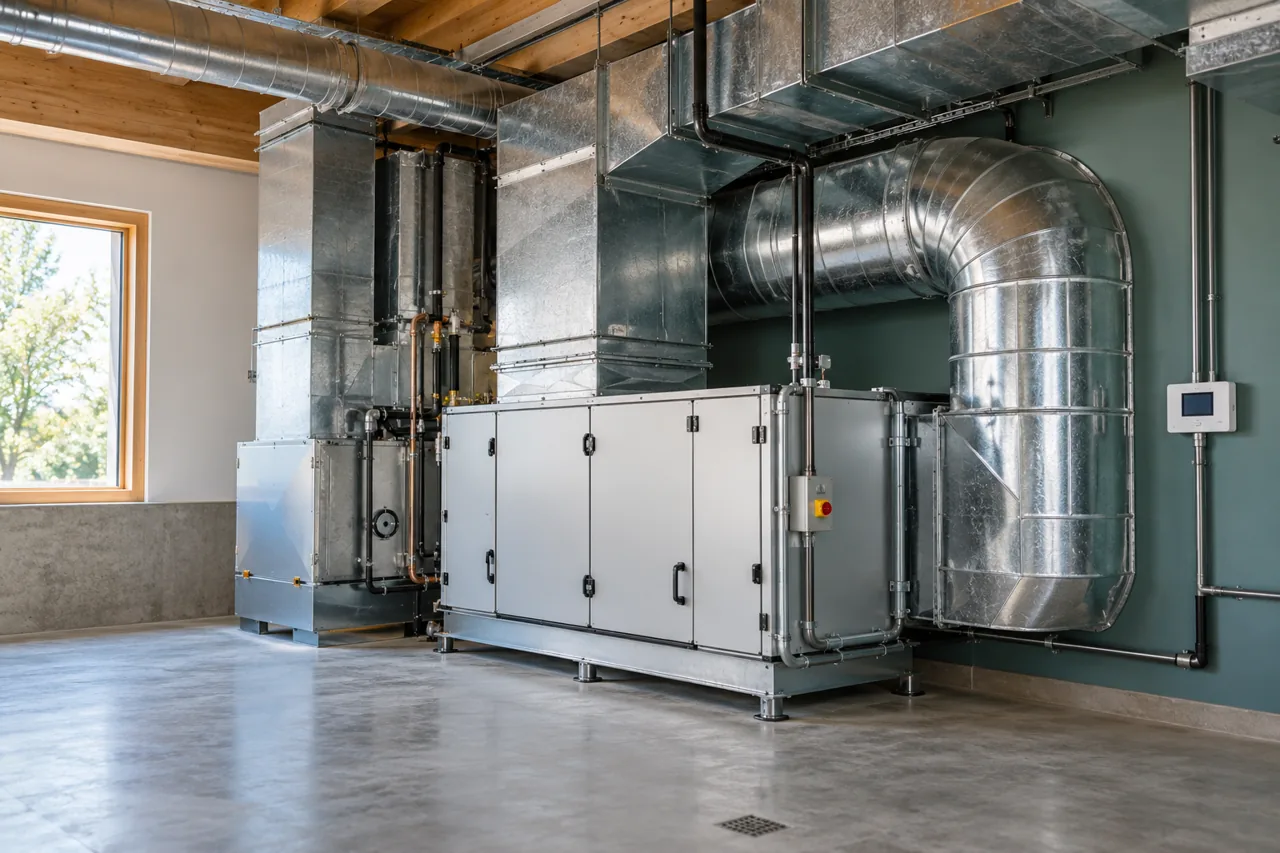
Temperature monitoring is the starting point. We can connect measurements to air conditioning, heat recovery ventilation, other ventilation systems, heating and cooling installations, allowing the system to respond autonomously to changing conditions using an agreed algorithm, without waiting for a manual click.
Assess conditions
The algorithm can consider temperature, humidity, air quality, outdoor conditions, occupancy and operating schedules, depending on the available sensors and integrations.
Select a response
Using measurements and agreed rules, the system can adjust temperature setpoints, ventilation rates, heating or cooling. Automation continues even when nobody has the dashboard open.
Check the outcome
Subsequent measurements show whether conditions are improving. We can record actions and raise an alert if the expected improvement does not occur. Confirming execution requires feedback from the installation.
Example: when temperature rises, the system can increase ventilation if conditions permit, or activate cooling. The response takes account of available measurements, priorities and installation limits.
The scope of automatic control is agreed after checking equipment compatibility. Before commissioning, we configure thresholds, hysteresis, delays, limits and manual override, and test the scenarios. Manufacturer safeguards remain in place; sending a command alone does not confirm execution.
Discuss monitoring and automatic environmental control